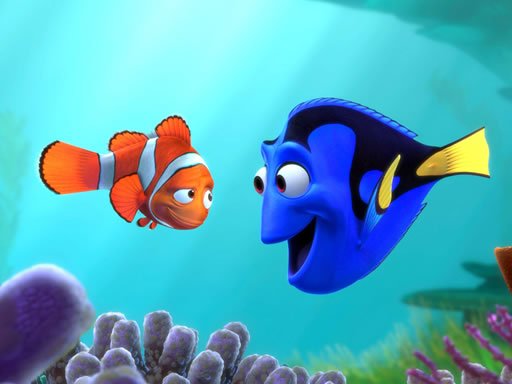
Ocean Animal Matching Game
Reviews
Ocean Animal Matching Game keeps its scope tight: flip tiles, remember positions, match sea creatures, and try to beat your own move count. The lack of a timer or penalties makes it genuinely low-stress, and the growing grid sizes give the challenge somewhere to go. Cartoon visuals and tap-or-click controls suit younger players and short breaks. The trade-off is depth; there is no story, no progression system beyond level size, and no multiplayer. It works best as a light concentration exercise rather than a long-term commitment.
About This Game
What You Actually Do
Every turn in Ocean Animal Matching Game asks the same question: can you remember where that dolphin was? Tiles sit face-down on a grid, each hiding one sea creature illustration. You flip two at a time. Matching images stay face-up; mismatched ones flip back after a short pause. The move counter records every pair you turn over, so the real measure of progress is not whether you finish, but how few attempts it takes. That single number turns a simple matching exercise into a quiet optimization problem.
How Difficulty Scales
The game spreads its challenge across several levels that add tiles as you advance. A small starting grid lets you learn the animal set and build a mental map. Later levels expand the board, which means more positions to track and a longer gap between seeing a tile and needing to recall it. There is no timer and no penalty for a wrong flip, so the pressure comes entirely from your own move count. That design keeps the experience calm while still giving players something concrete to improve.
Look and Feel
Bright cartoon illustrations give each sea animal a distinct silhouette and color, which matters more than it sounds. In a memory game, visual differentiation is a gameplay feature, not decoration. A cheerful ocean backdrop reinforces the relaxed tone, and the interface stays out of the way. Because everything runs in a web browser, there is nothing to install and no account to create. Sessions can last two minutes or twenty, and the game works the same on desktop and mobile through click or tap controls.
Approaches That Help
Rushing is the main way to lose efficiency. Flipping tiles at random produces matches eventually, but it inflates the move count fast. A steadier method is to scan the full board before your first flip, then work through it systematically so you are not re-checking the same area. When a mismatch appears, note both positions rather than only the tile you were hunting for. Replaying a finished level is the most direct way to lower your score, since you already know the layout.
Editorial Notes
✅ Compatibility & Testing
System Requirements




Comments
0 comments