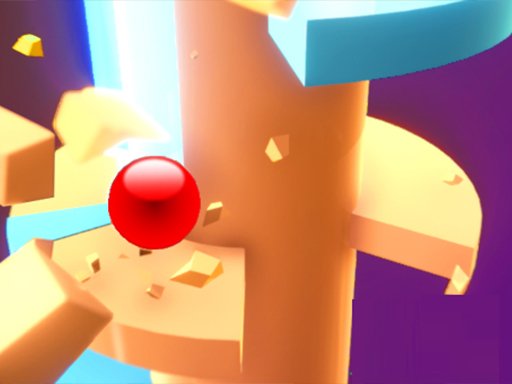
Helix Bounce Arcade Challenge
Reviews
Helix Bounce Arcade Challenge strips its design down to one repeated decision: when to rotate the tower so the bouncing ball meets a gap instead of a platform. That narrow focus makes it approachable for casual players and suitable for short sessions, while increasing speed and shifting obstacle arrangements give dedicated players a reason to keep improving. The lack of power-ups or complex systems keeps the experience honest, though players looking for variety beyond timing and observation may find the loop limited.
About This Game
Core Objective and Moment-to-Moment Play
In Helix Bounce Arcade Challenge, you control a ball that bounces automatically as it descends through a spiral tower. Your only direct action is rotating the tower. The ball never stops bouncing, so the entire game becomes a timing exercise: turn the structure so the ball passes through a gap in the next platform instead of striking a solid section. Each successful pass adds points, and the run continues until the ball hits an obstacle or falls off the tower.
How Rotation Shapes Each Attempt
Because the ball's bounce is automatic, the challenge is not about pressing a jump button at the right moment. Instead, you read the ball's position relative to the upcoming gap and rotate the tower to align that gap with the ball's path. The tower's platforms and gaps form a dynamic route, and every new attempt presents a different arrangement. That variation keeps repeated runs from feeling identical, even though the core action stays the same.
Controls, Difficulty, and Accessibility
The game uses simple swipe or rotation input that works on desktop and mobile browsers. There are no menus or buttons to manage during play, which keeps attention on the ball. Difficulty rises as speed increases and patterns change, so the same skill—watching the ball and turning the tower at the right moment—gets tested under growing pressure. The game is free to play, requires no download or installation, and contains no in-app purchases. Its colorful visuals and smooth animation are designed to be easy on the eyes and suitable for all ages.
Approaches That Tend to Work
Smooth, controlled rotations tend to beat frantic last-second turns. Watching the ball's position relative to the next gap before rotating gives you a clearer read than reacting after the gap is already close. As speed climbs, staying calm matters because panic rotations often overshoot the opening. Regular practice builds familiarity with how obstacle patterns shift, which helps you anticipate rather than guess. Taking a short break when frustrated can also protect the focus needed for precise timing.
Editorial Notes
Compatibility
System Requirements






Comments
0 comments