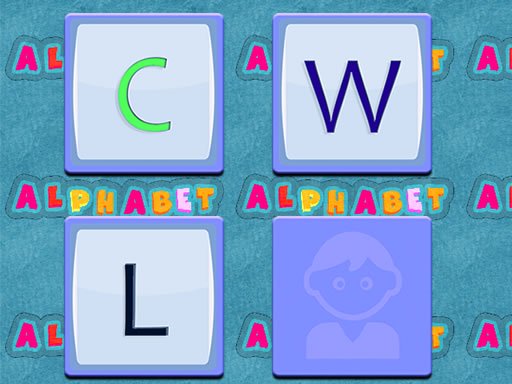
Letter Match Memory Challenge
Reviews
Letter Match Memory Challenge keeps its scope narrow and executes it cleanly: flip cards, match letters, beat your own move and time counters. The educational angle—sound cues tied to letter sounds and a colorful, readable interface—gives it a clear audience among children learning the alphabet and adults wanting a brief mental workout. Difficulty scaling from small to large grids adds replay value. The main limitation is depth; players seeking complex progression or varied modes will find it simple by design.
About This Game
Matching Letters, Training Recall
Letter Match Memory Challenge takes the familiar memory card game and adds a literacy layer. Each card hides a letter rather than a picture, so every successful match reinforces letter recognition alongside short-term memory. The goal is straightforward: flip two cards at a time, remember what you see, and clear the board by pairing every letter with its duplicate. Progress is measured by a move counter and a timer, giving players two clear metrics to improve against.
How a Round Unfolds
A round begins with a grid of face-down cards. Clicking one flips it to reveal a letter; clicking a second either confirms a match, which stays face-up, or reveals a mismatch, which flips both cards back. Because the board only shrinks as pairs are found, each successful match narrows the remaining possibilities and rewards players who track positions methodically. The game ends when the final pair is matched, and the score reflects both time and moves used.
Feedback and Accessibility
Sound effects tie into letter sounds and spellings, giving auditory learners a second channel for recall. The interface is colorful and uncluttered, with clear letter presentation that suits children learning the alphabet as well as adults wanting a quick mental workout. No downloads or installations are needed—the game runs directly in a browser. Multiple difficulty levels, ranging from a small easy grid to a larger hard grid, let players scale the challenge to their comfort level.
Approaches That Help
Starting on an easier grid lets players learn the card layout before the board grows crowded. Naming each letter silently as it appears can strengthen the link between visual shape and sound. Matching pairs promptly keeps the timer low, while a calm, systematic sweep of the board reduces mismatches. Regular short sessions tend to be more effective than one long sitting, since memory games reward consistency over marathon play.
Editorial Notes
Compatibility
System Requirements

Comments
0 comments