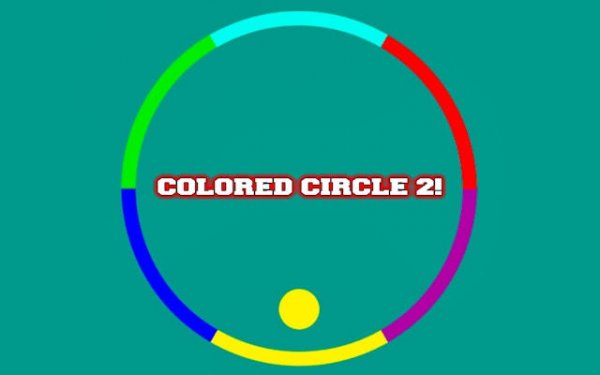
Hue Rotation Puzzle
Reviews
Hue Rotation Puzzle delivers a focused arcade challenge: rotate a six-zone arena to match a moving sphere's color indicator. Its strength lies in escalating speed and unpredictable bounce patterns, which demand quick reflexes. The clean visuals and one-touch controls make it accessible, while the lack of a fixed endpoint encourages personal score goals. Best suited for players who enjoy fast, repetitive reaction games rather than deep progression or story.
About This Game
Core Matching Mechanic
Hue Rotation Puzzle centers on a single, clear task: a sphere carrying a colored indicator travels continuously inside a circular arena split into six color zones. Your job is to rotate the entire arena left or right so that the zone directly beneath the sphere matches the indicator's color at the moment of contact. This creates a loop of watching the sphere's path, predicting where it will land, and turning the arena in time. The interaction is simple to grasp but demands steady attention because the sphere never stops moving.
Escalating Challenge
The game does not stay at one speed. As play continues, the sphere moves faster, and its bounce patterns become harder to anticipate. Early on, you can rotate the arena deliberately and still succeed. Later, the window for a correct match shrinks, pushing you toward quicker reactions and more precise timing. This gradual increase in difficulty keeps the game tense without becoming unfair too soon, rewarding players who adapt to the faster pace.
Visual Clarity and Controls
Each of the six zones is clearly delineated, and the sphere's indicator stands out against the background, so you can identify the target color at a glance. The game uses a clean, vibrant style that reduces visual clutter. Controls are limited to rotating the arena left or right with a mouse or touch input. There are no complex menus or tutorials, which makes the game easy to start for players of almost any age or experience level.
Session Length and Goals
A single round can last from a few seconds to several minutes depending on skill. Because there is no fixed endpoint, you set your own goals, such as beating a previous high score or surviving a certain number of matches. This flexibility suits short breaks as well as longer practice sessions, and the lack of a forced conclusion lets you stop or continue whenever you choose.
Editorial Notes
Compatibility
System Requirements


Comments
0 comments