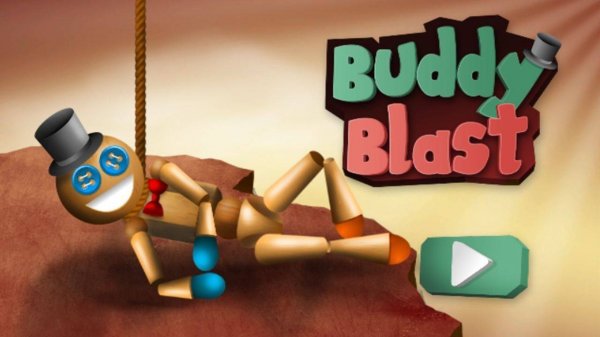
Rolling Friend Physics Puzzle
Reviews
Rolling Friend Physics Puzzle targets players who prefer thoughtful, low-pressure logic over reflex-based action. Its strength lies in the clean separation of object behaviors: removable, fixed, sliding, and bouncy. That clarity makes early stages easy to read and later stages satisfying to untangle. The absence of time limits or failure penalties encourages experimentation, which suits younger players and adults who enjoy physics-driven trial and error. The main limitation is that the source does not describe additional modes, online features, or a level count, so the scope of content remains unclear.
About This Game
Core Interaction Rules
Every puzzle in Rolling Friend Physics Puzzle is built from a small set of object behaviors. Some items disappear with a single tap. Others stay fixed no matter what. A third type slides when pushed but cannot be destroyed. Certain surfaces add bounce, changing the rolling character's direction. The goal is always the same: use these interactions to open a clear route to the exit. Success depends on reading how each element will react before you act.
Stage Progression and Difficulty
Stages arrive in a sequence that introduces new object combinations gradually. Early levels stick to basic removal and simple navigation. Later puzzles ask you to coordinate multiple object types at once. The difficulty climbs at a steady pace, so you get time to learn each mechanic before the next one appears. Because interactive elements are placed differently from stage to stage, no two puzzles feel identical.
Visual and Audio Feedback
Bright, clean graphics make each object type easy to tell apart. Color coding signals how an item behaves, so you can quickly judge what actions are possible. Gentle sound effects play when objects are moved or removed, and the background music stays calm to support focused thinking. The overall presentation is polished without being distracting.
Problem-Solving Rhythm
Each puzzle rewards observation before action. Studying the layout often reveals the most efficient sequence of moves. Some solutions require trial and error because the physics simulation makes objects interact in realistic ways. You learn to anticipate how a bouncing surface or a sliding block will affect the rolling character's path. That process rewards patience and creative thinking rather than speed.
Family-Friendly Design
The content suits all ages. There are no time limits or penalties for mistakes, which lowers pressure and lets you experiment freely. Simple touch controls mean even young children can join with minimal instruction. Adults will find the logic challenges engaging, making it a reasonable choice for shared play sessions.
Editorial Notes
Compatibility
System Requirements





Comments
0 comments