Ping Pong Arcade Sports Game
Reviews
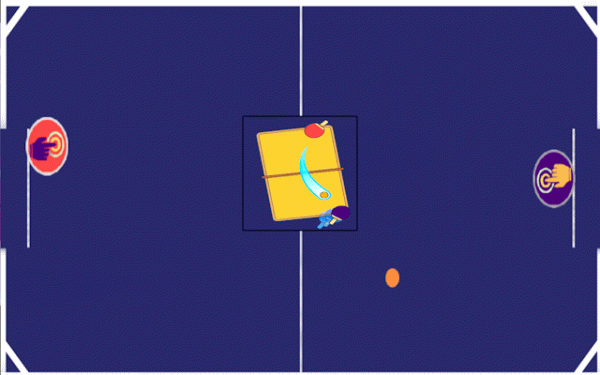
Ping Pong Arcade Sports Game strips table tennis down to its essentials: move your paddle, return the ball, and reach three points before your opponent. The minimalist visuals keep the ball easy to track, and the rising ball speed adds pressure without complicating the controls. Single Player mode offers a responsive computer opponent, while Two Player mode supports local competition on one device. Its short match length suits brief sessions, though players seeking deep customization or online play won't find it here.
About This Game
Match Rules and Scoring
Every round in Ping Pong Arcade Sports Game is a race to three points. That low threshold keeps individual matches short, so a single mistake doesn't doom a session. The ball accelerates as rallies stretch on, which means the longer you keep a point alive, the more your reflexes and positioning matter. Because the game resets quickly after a point, you can chain several matches together without waiting through long menus or animations.
Controls Across Devices
On a phone or tablet, you tap the left or right side of the screen to slide your paddle horizontally. On a computer, Player 1 uses the Q and D keys, while Player 2 uses the Left and Right Arrow keys. The control scheme is deliberately minimal: no spin buttons, no power meters, no angle modifiers. Your only job is to be in the right place at the right time and to aim your returns toward open space.
Solo and Local Two-Player Modes
Single Player mode puts you against a computer opponent that adjusts to how you play, so it won't simply repeat the same shot pattern forever. Two Player mode lets two people share one device, with each controlling a paddle from the same keyboard or touchscreen. That setup makes the game a natural fit for quick head-to-head sessions without needing a second device or an internet connection.
Reading the Ball and Improving
Because the visual style is clean and uncluttered, the ball and both paddles stay easy to track. The main skill you develop is anticipation: watching your opponent's paddle position and guessing where the ball will travel next. Quick, precise inputs matter more than long, sweeping movements. Playing against the computer can help you learn how the ball behaves at higher speeds, while local multiplayer gives you a live opponent whose habits you can read in real time.
Editorial Notes
Compatibility
System Requirements







Comments
0 comments